What Is Going Viral in Health analysis? 12 Stories From the Past Days and Months
What are Americans reading and sharing right now? This guide to viral health analysis stories gathers real headlines from news outlets, credits every source by name, and explains how to read each one with a clear head. It is a starting point, not a replacement for the original reporting.
A note on how this page works: the headlines and outlet names below come directly from public news feeds. We do not add details that the reports do not state, and we do not claim to know more than the original journalists. When you want facts, names, numbers, or quotes, open the linked report.

How These Stories Were Chosen
The stories below were found through public news feeds that list headlines from many outlets. We look for recent reports that match the topic, skip repeats of the same story, and keep the outlet name and date next to each headline so you can judge the source for yourself.
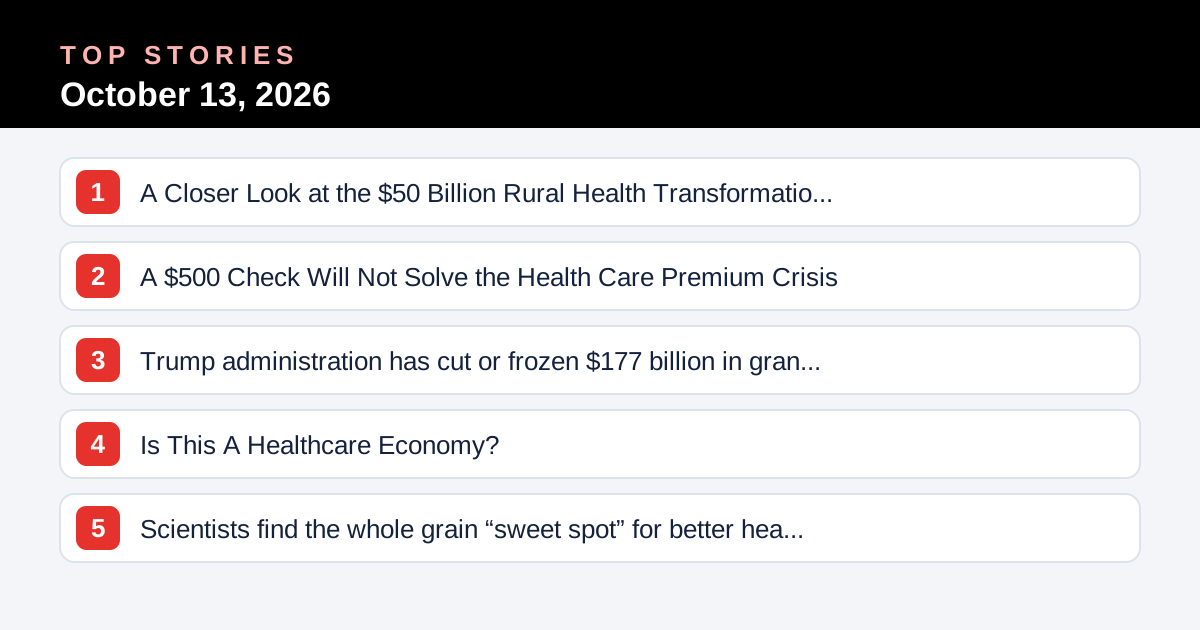
A Closer Look at the $50 Billion Rural Health Transformation Program
The headline "A Closer Look at the $50 Billion Rural Health Transformation Program" appeared on Sep 18, 2026 from KFF. Stories that touch everyday life tend to be passed along fast, even when only a few details are known. Before sharing, it helps to open the linked report and check who wrote it and when it was published. The full article is the place to find names, numbers, and quotes, none of which are repeated here.
Source: KFF, Sep 18, 2026
A $500 Check Will Not Solve the Health Care Premium Crisis
Center for American Progress reported this story on Sep 17, 2026 under the headline "A $500 Check Will Not Solve the Health Care Premium Crisis". Short headlines are built to be understood at a glance, which is why they travel so well on social media. Before sharing, it helps to open the linked report and check who wrote it and when it was published. This is one of the stories people have been talking about, and the source link below leads to the full report.
Source: Center for American Progress, Sep 17, 2026
Trump administration has cut or frozen $177 billion in grants across every state, analysis shows
On Sep 16, 2026, PBS published a report headlined "Trump administration has cut or frozen $177 billion in grants across every state, analysis shows". Stories that touch everyday life tend to be passed along fast, even when only a few details are known. Readers who want details should follow the link, because this summary does not replace the original reporting.
Source: PBS, Sep 16, 2026
Is This A Healthcare Economy?
Peterson-KFF Health System Tracker ran this item on Oct 5, 2026 with the headline "Is This A Healthcare Economy?". When a story trends, the first version many people see is a screenshot of the headline rather than the article itself. Checking the publication date matters, because older stories sometimes resurface and look new. This is one of the stories people have been talking about, and the source link below leads to the full report.
Source: Peterson-KFF Health System Tracker, Oct 5, 2026
Scientists find the whole grain “sweet spot” for better heart health
Science Daily ran this item on Sep 16, 2026 with the headline "Scientists find the whole grain “sweet spot” for better heart health". Short headlines are built to be understood at a glance, which is why they travel so well on social media. Checking the publication date matters, because older stories sometimes resurface and look new.
Source: Science Daily, Sep 16, 2026
Diet analysis links higher pulse intake to lower heart disease and diabetes risk
Under the headline "Diet analysis links higher pulse intake to lower heart disease and diabetes risk", Medical Xpress covered this story on Oct 4, 2026. Headlines like this spread quickly because readers often share them before opening the full article. Checking the publication date matters, because older stories sometimes resurface and look new. The full article is the place to find names, numbers, and quotes, none of which are repeated here.
Source: Medical Xpress, Oct 4, 2026
Analysis: Earlier detection could unlock $527B in women's health spending
Under the headline "Analysis: Earlier detection could unlock $527B in women's health spending", MobiHealthNews covered this story on Oct 7, 2026. When a story trends, the first version many people see is a screenshot of the headline rather than the article itself. Before sharing, it helps to open the linked report and check who wrote it and when it was published. The full article is the place to find names, numbers, and quotes, none of which are repeated here.
Source: MobiHealthNews, Oct 7, 2026
How a $527 billion growth opportunity in women’s health can improve health outcomes
Under the headline "How a $527 billion growth opportunity in women’s health can improve health outcomes", Deloitte covered this story on Sep 29, 2026. A headline can only hold a fraction of a story, so the full report usually contains context that a headline leaves out. Updates are common as new information arrives, so the original page may now say more than the headline did. The full article is the place to find names, numbers, and quotes, none of which are repeated here.
Source: Deloitte, Sep 29, 2026
US Poised To Boot Legal Immigrants From Medicaid, Including Refugees and Sex-Trafficking Victims
KFF Health News ran this item on Sep 30, 2026 with the headline "US Poised To Boot Legal Immigrants From Medicaid, Including Refugees and Sex-Trafficking Victims". Short headlines are built to be understood at a glance, which is why they travel so well on social media. Updates are common as new information arrives, so the original page may now say more than the headline did. The full article is the place to find names, numbers, and quotes, none of which are repeated here.
Source: KFF Health News, Sep 30, 2026
Trump's $500 Obamacare 'rebate' checks land in prime political battlegrounds
The headline "Trump's $500 Obamacare 'rebate' checks land in prime political battlegrounds" appeared on Oct 1, 2026 from Reuters. Stories that touch everyday life tend to be passed along fast, even when only a few details are known. If the story matters to you, compare it with a second outlet to see whether the main points match. We include it here because it was widely reported, not because we have verified every detail.
Source: Reuters, Oct 1, 2026
Analysis: Children With Disabilities Have a Right to Health Services in School. Here’s a Guide
California Health Report reported this story on Oct 6, 2026 under the headline "Analysis: Children With Disabilities Have a Right to Health Services in School. Here’s a Guide". Headlines like this spread quickly because readers often share them before opening the full article. If the story matters to you, compare it with a second outlet to see whether the main points match.
Source: California Health Report, Oct 6, 2026
New analysis shows high levels of violence against adolescent girls
World Health Organization (WHO) ran this item on Oct 5, 2026 with the headline "New analysis shows high levels of violence against adolescent girls". Headlines like this spread quickly because readers often share them before opening the full article. If the story matters to you, compare it with a second outlet to see whether the main points match. The full article is the place to find names, numbers, and quotes, none of which are repeated here.
Source: World Health Organization (WHO), Oct 5, 2026
Why Numbers in Headlines Need Context
A number in a headline can sound precise while hiding important details. A figure may refer to a single place, a short period, or a particular definition that differs from what readers assume. Percentages can look large when the starting number is small, and totals can look small when spread across many people. The article itself usually explains what is being counted and how, which is why it is worth reading beyond the first line.
How to Follow a Story Over Several Days
Big stories usually take days to settle. Early reports are often incomplete, follow-up reports add context, and later articles may correct earlier details. If you want to stay informed without being swamped, pick one or two reliable sources, read their updates once or twice a day, and ignore reposts that add no new information. This keeps you informed without chasing every alert.
How Publishing Times Affect What You See
The United States spans several time zones, so a story posted in the morning on the East Coast may reach the West Coast before anyone there has woken up. Outlets also schedule articles around peak reading hours, and platforms show posts at different moments to different people. As a result, two readers can see the same story at very different points in its life. Checking the publication date and time on the original page helps you understand how current a report really is.
Sources, Dates, and Named Reporters
Three small details tell you a lot about a news article: who published it, when, and who wrote it. A named reporter, a visible date, and links to original documents or statements make an article easier to check. When those details are missing, it is harder to know how much weight to give the story. The reports linked in this roundup show the outlet and date so you can make that judgment yourself.
Opinion Pieces Versus News Reports
News reports aim to describe what happened, while opinion pieces argue for a point of view. Both can be valuable, but they should not be mixed up. Reputable outlets label opinion and analysis clearly. When a headline sounds more like a verdict than a description, check whether the article is an opinion column before treating its claims as settled facts.
What a Trending Topic Does and Does Not Tell You
A trending label means many people are talking about something right now. It does not mean the topic is important, true, or new. Trends can be driven by a single post, a joke, or coordinated sharing. Use trends as a reason to look closer, then rely on the reporting itself, with named sources and clear dates, to understand what actually happened.
How Fact-Checkers Verify Viral Claims
Fact-checkers follow a simple routine. They find the original source of a claim, look for documents or recordings that support it, and ask whether the evidence matches what is being said. They also check dates and locations, because many viral posts mix real material with the wrong context. Readers can borrow the same habits: trace a claim back to where it started, look for primary sources such as official statements or court records, and be cautious when a post offers dramatic wording but no way to confirm it.
Why Context Matters More Than Speed
Being first to share a story is rarely as useful as being right. Context, such as what happened before, who is affected, and what is still unknown, is what turns a headline into understanding. Taking a few extra minutes to read the full report and a second source usually gives a far clearer picture than the first version that reaches your feed.
The Bottom Line on Today's Viral Health analysis Stories
These stories are a snapshot of what has been widely reported. Because details change, the linked articles are the best place for accurate and current information. Check back for new roundups as other stories rise through the news. Notice how a story makes you feel, then check the facts. Read to understand, not just to react. Small details often change the meaning of a headline. Compare headlines with the articles they point to. Ask who benefits from a story spreading. A little skepticism goes a long way. Good habits make you a better reader. Bookmark the stories you want to follow. Take a breath before you post.
This roundup is compiled automatically from the linked news reports. Details may be incomplete or change; please read the original sources.